Iguana on the Beach: A Designer’s Review
As a designer who has spent countless hours staring at digitized paths and testing stitch-outs on scrap fabric, I approach every new machine embroidery design with a mix of curiosity and skepticism. We all know that what looks vibrant on a screen does not always translate well to thread and fabric. Recently, I had the chance to evaluate Iguana on the Beach, a design that promises a splash of tropical fun. After putting it through its paces on various materials and considering its potential for commercial use, I have formed a clear opinion on where this piece fits in a professional workflow.
First Impressions and Visual Personality
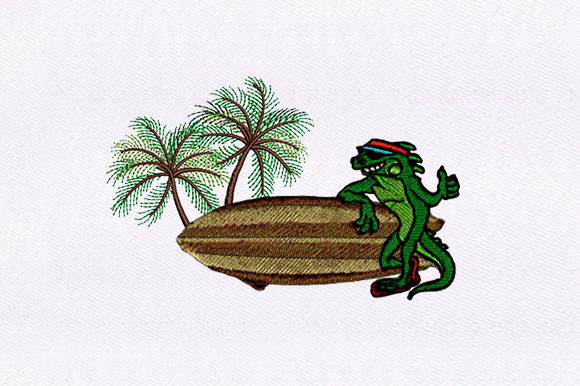
The immediate appeal of Iguana on the Beach lies in its playful narrative. It is not just a static animal portrait; it is a surfing iguana on a beach, which instantly sets a lighthearted, vacation-ready mood. The composition is dynamic, capturing motion in a way that feels energetic rather than chaotic. For a craft business owner or an Etsy seller, this visual personality is crucial. It speaks directly to customers looking for unique, cheerful items that stand out from generic floral or monogram patterns.
The color palette described as "really fun and colorful" suggests a high-contrast approach. In embroidery, color contrast is vital for readability. If the design relies on bright greens, blues, and sandy tones, it will pop against neutral backgrounds. However, this vibrancy requires careful thread selection. As a reviewer, I look for designs that allow for some creative interpretation while maintaining their core identity. This design seems to offer that balance, making it suitable for both bold statement pieces and subtle accents.
Real-World Application: From Mockup to Finished Product
To truly understand the value of an embroidery file, you must imagine it on actual products. I visualized Iguana on the Beach on a canvas tote bag design. The sturdy texture of canvas provides an excellent base for the likely fill stitch areas required for the iguana’s body and the waves. The result would be a durable, eye-catching accessory perfect for summer markets or beachside boutiques.
Another strong candidate is sweatshirt embroidery. Placing this design on the left chest or as a larger back print on a hoodie creates a custom apparel item that appeals to teens and young adults. The whimsical nature of a surfing reptile fits perfectly with current trends in quirky, personalized fashion. For small shop product lines, this could be a seasonal bestseller during spring and summer months.
I also considered its use in baby embroidery projects. While the theme is universal, the complexity might be better suited for older children’s items or nursery decor rather than delicate newborn clothes. A pillow cover featuring this design could add a playful touch to a child’s room, provided the stitching is secure and the threads are high-quality to withstand washing.
Technical Considerations and Stitching Performance
When evaluating any digital embroidery file, technical execution is paramount. The description notes that the design comes with multiple file formats, which is essential for compatibility across different machines. However, without specific stitch count data, I advise checking the density before committing to a large production run.
The interplay of satin stitch and fill stitch will determine the texture of the final piece. The iguana’s scales and the ocean waves likely require different stitch types to create depth. A well-digitized design will use running stitch outlines to define shapes without adding unnecessary bulk. If the stitch density is too high, the fabric may pucker, especially on lighter materials. Conversely, if it is too low, the backing fabric might show through, ruining the visual appeal.
Fabric choice plays a significant role here. This design would perform beautifully on medium-weight cottons, denim, or canvas. However, caution is needed with stretchy fabrics or thin silks. The weight of the thread could distort the material. Always use an appropriate stabilizer—cut-away for stretchy garments and tear-away for stable woven fabrics—to ensure the finished product maintains its shape.
Strategic Placement and Limitations
While Iguana on the Beach is versatile, it is not universal. Curved surfaces like caps present a challenge. The detailed elements of the surfing pose might distort if the hoop size is too small or if the cap’s curvature is extreme. For embroidered patch creation, however, this design could excel. Patches allow for dense stitching on a stable backing, which can then be applied to various garments, offering flexibility to the end-user.
Dark fabrics require special attention. If the design includes light colors for the beach sand or highlights on the iguana, underlay stitches become critical to prevent the dark fabric from showing through. Testing on black or navy fabric is a must before selling these as commercial embroidery items. Additionally, tiny details may get lost if the design is scaled down too much. Always check the minimum recommended hoop size to ensure clarity.
Enhancing Brand Value and Customer Trust
For creative entrepreneurs, the quality of your design assets reflects your brand. Using a well-executed design like Iguana on the Beach can enhance customer trust. When a buyer receives a personalized gift that is crisp, colorful, and professionally stitched, they are more likely to return and recommend your shop. This design supports brand consistency if your aesthetic leans toward fun, outdoor, or tropical themes.
Moreover, the uniqueness of the subject matter aids in buyer engagement. In a saturated market, a surfing iguana stands out. It invites conversation and shares well on social media, providing organic marketing for your handmade product line. Whether used for holiday embroidery gifts or everyday wear, the design’s charm adds perceived value to the item.
Practical Notes for Designers and Makers
Before launching this design into your product lineup, follow these practical steps:
- Test on Scrap Fabric: Always stitch out a sample on the same material you plan to use for sales. Check for puckering, thread breaks, or color blending issues.
- Check Thread Contrast: Ensure your thread colors match the intended vibe. Vibrant greens and blues should be distinct from each other to maintain shape definition.
- Review License Terms: Since this is a digital embroidery file, confirm whether the license allows for commercial use of finished items. Most designers allow selling physical products but restrict reselling the digital file itself.
- Mockup in Black and White: Convert your preview image to grayscale to check for contrast issues. If the design disappears in black and white, it may lack sufficient definition in real life.
- Consider Washability: If creating items for frequent use, such as kitchen towels or active wear, ensure the stitches are secure and the threads are colorfast.
In conclusion, Iguana on the Beach is a promising addition to any embroidery library. Its fun theme and colorful presentation make it ideal for a wide range of embroidery project types, from casual apparel to home decor. By paying attention to technical details like stabilizer choice and fabric compatibility, you can transform this digital asset into a high-quality finished product that delights customers and boosts your craft business.